
You paid your insurance premium to protect yourself financially when something went wrong. But when you finally need that protection, receiving a message saying “Your claim has been rejected” can be stressful and confusing. However, an Insurance Claim Rejection does not always mean the matter is over. If you need help understanding a rejected insurance claim, you can explore our claim assistance services. Whether your claim has been rejected, delayed or partially settled, knowing what to do next can help you make a more informed decision. What Does Insurance Claim Rejection Mean? An insurance claim rejection means the insurer has decided not to pay the claim, either completely or for a particular part of it. Claims may be rejected because of: A rejection does not automatically establish that the insurer or policyholder is right or wrong. The policy wording, facts, documents and applicable rules need to be examined. Why Are Insurance Claims Rejected? 1. Policy Exclusions Insurance policies do not cover every possible event, treatment or expense. Exclusions specify situations where the insurer may not be liable. If your claim is rejected because of an exclusion, ask the insurer for the specific policy clause supporting the decision. Don’t rely only on a statement such as “This is not covered.” 2. Waiting Period Some insurance policies, particularly health insurance policies, contain waiting periods. If your claim is rejected because of a waiting period, check: 3. Non-Disclosure or Incorrect Information If an insurer believes that relevant information was not disclosed or incorrect information was provided while purchasing the policy, it may become a reason for a claim dispute. This can involve medical history, previous insurance, previous claims, vehicle details, ownership information or other relevant information. Check what information you actually provided when purchasing the policy and compare it with the reason stated by the insurer. 4. Missing or Incomplete Documents Documentation plays an important role in the Claim Settlement process. Depending on the type of claim, documents may include: If documentation is the problem, ask the insurer exactly what is missing and whether the claim can be reconsidered after submission. 5. Incorrect Interpretation of Policy Terms Sometimes disputes arise because the insurer and policyholder interpret the coverage, exclusion, waiting period, or other policy condition differently. If you disagree with the reason given for rejection, check the exact policy wording and the documents related to your claim before deciding what action to take. This is useful because it naturally leads into your claim dispute assistance service. What to Do If Your Insurance Claim Is Rejected If you are searching for what to do if an insurance claim is rejected, follow a structured process instead of relying only on repeated phone calls. Step 1: Get the Rejection Reason in Writing If you have only received a verbal explanation, request a formal written rejection or repudiation letter. The document should ideally mention: Keep this letter safely. It can become important if you later submit a formal grievance or appeal. Step 2: Review Your Insurance Policy Don’t assume that paying premiums automatically means every claim must be paid. Instead, ask: “What does my policy cover, and does the reason given for rejection match the policy terms?” Review: The exact wording of your policy is extremely important when challenging a claim decision. Step 3: Organise Your Evidence Create a complete claim file before submitting an appeal. Keep copies of: A well-organised file makes it easier to identify problems and explain your case clearly. Step 4: Submit a Written Representation If you believe the rejection should be reconsidered, submit a formal written representation to the insurer. Your representation should clearly explain: Keep the representation factual, specific and evidence-based. Step 5: Escalate Through the Grievance Process If the insurer does not reconsider the decision or you are not satisfied with the response, you can use the insurer’s grievance redressal mechanism and, where applicable, approach the relevant external grievance forum. You can also explain that policyholders should keep copies of all correspondence and acknowledgement numbers. Prevention: How to Avoid Future Rejections Disclose everything – pre-existing conditions, lifestyle habits, previous claims Read your policy document – understand exclusions, waiting periods, and sub-limits before you need to claim Keep all medical records – maintain a health file with all test reports, prescriptions, and hospitalization records Inform your insurer promptly — Follow the notification and pre-authorisation requirements specified in your policy and the insurer’s claim process. Use network hospitals – cashless claims have fewer documentation disputes Renew on time – a lapsed policy means no coverage Conclusion A rejected insurance claim doesn’t always mean the end. Eternity Claim Solutions helps policyholders understand claim rejection, delays, and disputes and guides them on the next steps. Facing an insurance claim rejection? Get in touch with us for assistance with understanding your claim and exploring the next steps. If your grievance is not resolved through the insurer’s internal grievance process, you can explore the grievance redressal options provided by IRDAI. Policyholders can also refer to the Bima Bharosa grievance platform for information about raising an insurance grievance. Policyholders may also consider approaching the Insurance Ombudsman, where applicable, for eligible insurance grievances that remain unresolved after approaching the insurer.
Cashless Claim Denied at Hospital: What Should You Do?
A cashless health insurance claim can be denied for several reasons, such as treatment at a non-network hospital, incomplete documents, policy lapse, or exclusions mentioned in your policy. While this can be stressful during a medical emergency, understanding the reason behind the rejection is the first step toward resolving the issue. What Should You Do? A denied cashless claim does not always mean you have lost your insurance benefits. Taking prompt action and knowing your rights can help you resolve the issue more effectively.
Why Do Insurance Companies Delay Claims? Common Reasons & Solutions
Why do insurance companies delay claims? This is one of the most common questions policyholders ask after filing a health, life, or motor insurance claim. While some delays happen because of necessary verification, others are caused by incomplete documents, policy conditions, or communication gaps. Understanding the reasons behind delayed insurance claims can help you take the right steps and avoid unnecessary stress. Submitting an insurance claim is typically the initial action individuals take following a medical emergency, accident, or financial setback. While individuals hold expectations for swift resolutions, insurance claim delays are a frequent issue that can lead to stress and uncertainty. Grasping the factors that contribute to these delays can assist you in managing the process more efficiently and circumventing unnecessary issues. Frequent Causes of Delayed Insurance Claims 1. Incomplete Paperwork A lack of necessary documents, inaccurate information, or unsigned paperwork are among the leading contributors to delays in claims. Insurers may request further documentation prior to adjudicating the claim. 2. Thorough Verification Procedures Insurance providers meticulously authenticate each claim to detect fraud. If your claim has been delayed or rejected, professional guidance can help you understand the next steps. Accidental deaths or intricate medical situations often necessitate an in-depth investigation, which can prolong the timeline for settlement so review of proposal form is necessary by the customer so that any discrepancy in filling up the details is rectified. 3. Declarations of PED with health and habits vs Terms and Conditions of the Policy Many disputes also arise because of policy mis-selling or misunderstanding of policy terms. Aspects like waiting periods, exclusions, or medical conditions that were not disclosed can cause delays in approval. 4. Mistakes in the Claim Application Even trivial errors—like wrong policy numbers, name discrepancies, or incomplete information—can hinder the process and necessitate amendments. 5. Insufficient Communication Delays may arise when policyholders are not aware that the insurer requires additional documents or for evaluation of the claim. Don’t reply to mail seeking documents from the insurance company. Check your registered mail id and the app of the insurance company with your registered mobile number. What Should You Do If Your Insurance Company Delays Your Claim? Submitting accurate information. If you find that your claim is progressing slower than anticipated, you can: How to Avoid Insurance Claim Delays Conclusion: Don’t Let Insurance Claim Delays Affect Your Rights. Insurance claims are intended to offer financial assistance in challenging times, but delays can occasionally render the process exasperating. Often, delays in claims occur due to incomplete paperwork, policy stipulations, or verification processes. By familiarizing yourself with your policy, keeping thorough records, and being proactive, you can enhance the likelihood of a smoother and more rapid claims settlement experience.If you find your insurance claim is delayed without a justifiable explanation, Eternity Claim Solutions can help you understand your rights. You can also raise your complaint through the IRDAI Bima Bharosa Portal if your insurer does not resolve your grievance. You can also read the official IRDAI Guidelines regarding insurance claims.

Property Insurance & Personal Accident Insurance: Protection Is Only Complete When Your Claim Is Settled
Property Insurance & Personal Accident Insurance: Protection Is Only Complete When Your Claim Is Settled You Bought Insurance for Peace of Mind. But What Happens When Your Claim Is Rejected? Every year, thousands of Indians purchase property insurance and personal accident insurance to protect their homes, businesses, and families. However, many policyholders face unexpected challenges when they need their insurance the most. Delayed settlements, partial payments, and claim rejections often leave customers frustrated and financially burdened. At Eternity Claim Solutions LLP, we believe that insurance should provide financial security—not additional stress. We specialize in helping policyholders pursue fair settlement of genuine insurance claims. Property Insurance: Your Assets Need Protection Property insurance protects valuable assets such as: Typical risks covered include: Common Problems Faced by Property Insurance Customers Many policyholders experience: Personal Accident Insurance: Financial Support When Life Changes Suddenly Personal accident insurance provides financial protection in cases of: This insurance is especially valuable for salaried employees, business owners, self-employed professionals, and workers whose income depends on their ability to work. Common Claim Challenges Families often struggle because: The Reality of Insurance Claims Industry reports and regulatory disclosures over recent years indicate that while many insurance claims are settled, a significant number face: For affected families, these delays can create severe financial hardship, particularly after property damage or serious accidents. How Eternity Claim Solutions LLP Can Help If your genuine insurance claim has been delayed, underpaid, or rejected, professional assistance can make a substantial difference. Our services include: Our objective is to help policyholders pursue the settlement they are entitled to under the terms of their insurance policy. Why Professional Claim Assistance Matters Insurance policies contain complex legal and technical language. Many genuine claims are weakened because of procedural mistakes, incomplete documentation, or lack of understanding of policy conditions. Professional guidance can help ensure that: Don’t Let a Rejected Claim Become a Permanent Loss Whether your property has suffered fire damage, flooding, burglary, or your family is facing financial hardship due to an accident, your insurance policy should work when you need it the most. If your genuine claim has been rejected, delayed, or only partially settled, don’t give up without understanding your rights. Contact Eternity Claim Solutions LLP We help policyholders across India with professional claim support and guidance for property insurance and personal accident insurance claims. Because buying insurance is only the first step. Receiving a fair claim settlement is what truly matters. Read Other Articles Also: Review your employer’s Health Insurance. It could inadequate with restrictions. Increase in hospitalization Risk with increases in age: What It Means for You and Your Family Insurance Cover for Newborn in India: Hidden Gaps & How to Protect Yourself

Review your employer’s Health Insurance. It could inadequate with restrictions.
Even if your employer provides health insurance, you should also consider buying an adequate personal health insurance policy for yourself and your family.Policies offered by companies come with several limitations and conditions. If your employer provides health insurance, it can certainly help during a medical emergency, but it may not be sufficient to cover all expenses.Following are major areas of concen Low Room Rent Limits In many corporate health insurance policies there is a likelihood of, room rent being restricted.Some policies allow room rent only up to ₹5,000 per day.The sum assured is also in the lower ranges if 2 to 5 lacs.If you choose a room that costs more than the permitted limit, you may have to bear a substantial part of the hospital bill yourself.For example, if your policy allows a room rent of ₹4,000 per day but you choose a room costing ₹ 8,000 per day, the insurer may proportionately reduce payment for several other hospital expenses as well. Low Sum Insured: Many corporate policies offer only ₹2–5 lakh as the total insurance cover, which is inadequate considering today’s medical costs. Co-payment Clause: Some corporate health insurance policies require the insured to pay 10–20% of the treatment cost from their own pocket, while the insurer pays only the remaining amount. Limited Coverage for Modern Treatments: Coverage for robotic surgery and other advanced medical procedures is either limited or excluded in several corporate policies. Cataract Treatment Limits: Many policies cap cataract treatment expenses around ₹ 20,000–₹25,000 per eye which is low whereas actual treatment costs can be significantly higher. Limited Family Coverage: Corporate policies are primarily designed for employees. Although some employers allow family members to be covered, parents and in-laws are often excluded and with low Sum assred it becomes inadequate. Coverage Ends with Employment: Corporate health insurance remains valid only while you are employed with the company. If you resign, retire, or lose your job, the insurance benefit usually ends. No one suggests that you can continue it individually for one year and port it to another company thereafter if you wish to continue the advantage of exhausted waiting period of PED. This article does not mean to undermine the advantages of health Insurance provided by corporates becauseWhen the employer arranges the insurance employees receive coverage without undergoing medical tests with lesser cost. Even people with pre-existing illnesses often get coverage after a relatively short waiting period. So Don’t Delay and consider buying Personal Health Insurance separately. Many people believe they can purchase personal health insurance later. This can be a costly mistake. Experts advise purchasing a personal health insurance policy at a younger age because: Premiums are lower. Waiting periods begin earlier. You are more likely to get comprehensive coverage before developing health problems. As age increases, premiums rise and insurers may impose more restrictions. How Much Health Insurance Should You Have? Experts recommend buying a personal health insurance policy with a cover of at least ₹10 lakh with adequate top up, in addition to your employer’s health insurance. Following Features Should be checked before buying: Choose a policy that offers:

Increase in hospitalization Risk with increases in age: What It Means for You and Your Family
Increase in Hospitalisation Risk After 45 | Health Insurance Claim Support Recent healthcare trends in India reveal an important reality — the risk of hospitalization increases significantly after the age of 45. This is not just a medical statistic; it is a serious reminder for individuals and families to rethink their approach towards health insurance, financial planning, and preventive healthcare. As age increases, medical emergencies become more common, and without proper preparation, the financial burden can be overwhelming. Why Health Insurance Claims Get Rejected in India Understanding the Growing Health Risk After the age of 45, the chances of requiring hospital care rise sharply due to several factors, including: For individuals aged 60 and above, these risks become even more serious, placing additional emotional and financial pressure on families. Why This Matters More Than Ever Many people believe health insurance is only necessary later in life. However, delaying coverage can create major challenges, such as: Starting early not only provides better protection but also improves long-term financial security. The Hidden Problem: Claim Rejections Even insured individuals often face difficulties when filing health insurance claims. At Eternity Claim Solutions LLP, we regularly assist families dealing with: During a medical crisis, families should focus on recovery — not on complicated paperwork and claim disputes. How You Can Protect Yourself and Your Family 1. Buy Health Insurance Early Purchasing health insurance before the age of 45 can help you secure: 2. Choose Comprehensive Coverage Select policies that include: 3. Maintain Proper Documentation Always keep records of: Proper documentation can significantly reduce claim-related complications. 4. Prioritise Preventive Healthcare Regular health check-ups can: How Eternity Claim Solutions LLP Can Help When insurance claims become stressful or complicated, we step in to support you. Our services include: Our goal is simple: You focus on recovery — we help you navigate the claim process. Final Thoughts The increasing hospitalisation risk after 45 is a reality that cannot be ignored. However, with proper planning, awareness, and timely support, you can protect both your health and your financial future. Do not wait for a medical emergency to understand the importance of preparedness. Need assistance with a rejected or delayed health insurance claim? Connect with Eternity Claim Solutions LLP today — because your claim deserves proper support and attention.

Insurance Cover for Newborn in India: Hidden Gaps & How to Protect Yourself
Insurance Cover for Newborn in India: Hidden Gaps & How to Avoid Claim Rejection Newborn insurance in India is often assumed to cover all medical expenses, but many parents are unaware of the hidden gaps until it’s too late. If you’re wondering why newborn insurance claims get rejected in India, the answer usually lies in policy limits, waiting periods, and unclear coverage terms. During critical situations like NICU care, these gaps can lead to unexpected financial stress, making it essential to understand exactly what your policy covers before you need it the most. Welcoming a baby is one of life’s happiest events. But if medical problems pop up, like the need for NICU care, what should be a joyful time can become exhausting and draining. A lot of families think their health insurance will handle these costs. The truth is, it often doesn’t cover everything—or worse, claims might get denied. At Eternity Claim Solutions, we often come across cases where families face rejected or paid claims during these tough moments. NICU Care Costs: The Unseen Reality in India Babies born with health issues need urgent and intensive medical care. Families often face huge money problems when their insurance doesn’t cover the costs. The Biggest Mistake Parents Make The biggest blunder many parents make? Believing their health insurance will handle everything. Most insurance plans have restrictions, and people realize this when they try to claim. The Gap Between Insurance Coverage and Actual Expenses The real issue starts here: 1. Maternity Coverage Limits Most insurance plans set a limit on newborn expenses ranging from ₹50,000 to ₹1 lakh. 2. Limits Within Overall Coverage Even with a large sum insured, insurers may limit the amount available to cover newborn care. 3. Waiting Time Maternity benefits often come with a waiting time of 2 to 4 years before they can be used. 4. Late Addition of Newborns Some policies let you add a newborn after 90 days, which leaves a critical coverage gap on. Why Newborn Insurance Claims Get Rejected Having insurance doesn’t always guarantee claim approval. Claims can still be denied or reduced because of certain conditions. These problems can leave families under financial strain just when they need help the most. A Real-Life Scenario Imagine this: premature twins needed long-term care in the NICU. The family had to come up with the remaining ₹9 lakh out of their savings or by borrowing money. , situations like these happen more often than we think. Why Maternity Insurance Falls Short Health insurance companies view maternity coverage differently. Because of this, families with insurance can still face surprise medical costs. How to Protect Yourself Financially Here’s what you can do to stay prepared: Review Your Policy Carefully Know what the maternity coverage includes, what it doesn’t, and any waiting times. Choose Higher Coverage Plans Look for insurance that covers newborn needs well and avoids too many limits. Add Your Newborn Early Sign your baby up for the policy right away after birth. Maintain an Emergency Fund Always have a financial safety net ready for unexpected medical expenses. How Eternity Claim Solutions Supports You If your insurance claim gets denied or paid, you don’t have to deal with it on your own. Eternity Claim Solutions works to help with: Our focus is simple: Making sure you receive the claim amount that is owed to you. Final Thoughts No one can predict a medical emergency with a newborn, but you can handle the financial burden if you’re informed and backed by the right support. Knowing what your policy covers now can keep you from big money problems later. Need Help with a Rejected Insurance Claim? Don’t settle for less if your claim was denied or partially paid. Get it reviewed. Reach out to Eternity Claim Solutions now to get expert help and assistance with claims.
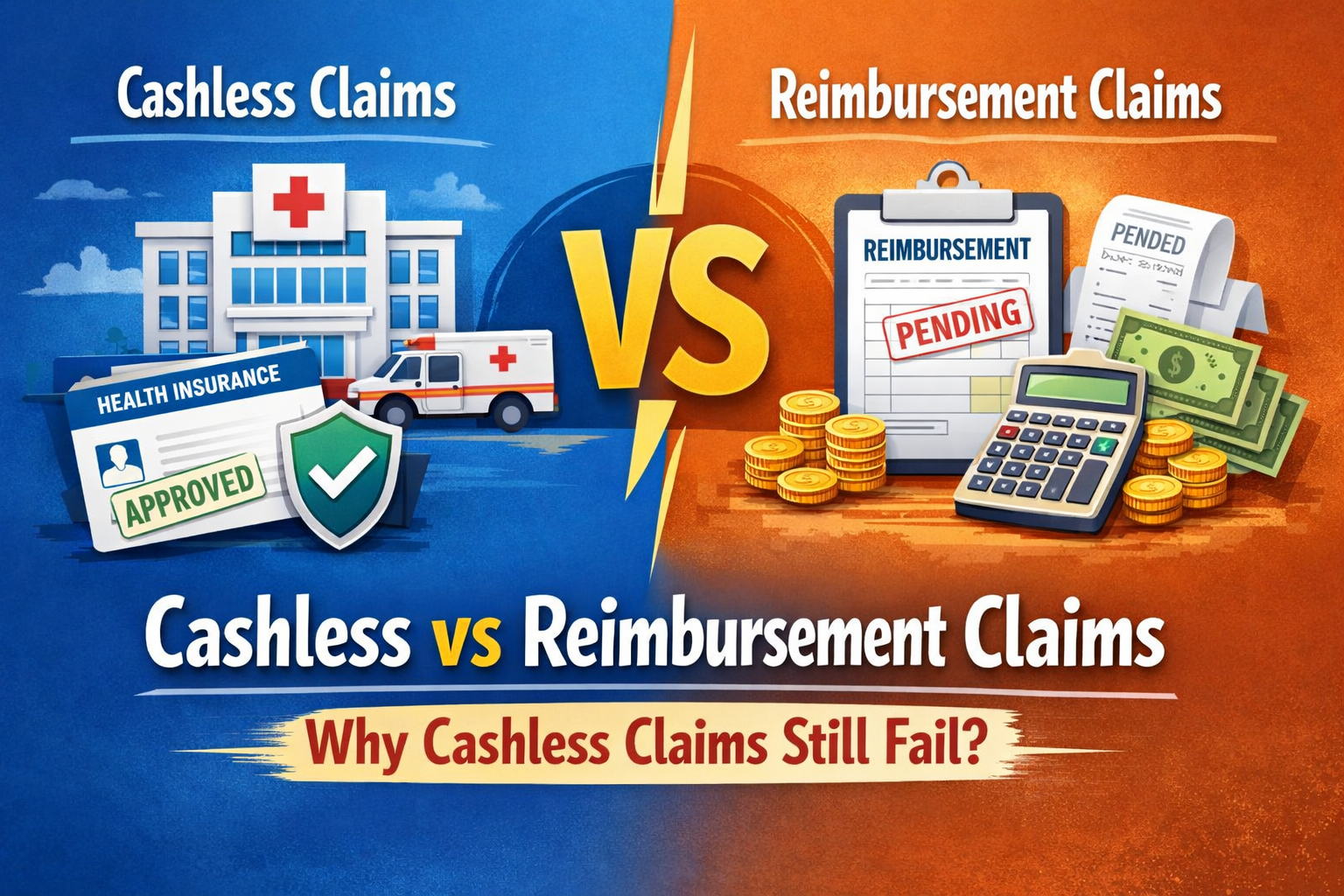
Cashless vs Reimbursement Claims: Why Cashless Claims Still Fail
Cashless vs Reimbursement Claims: Why Cashless Claims Still Fail Cashless vs Reimbursement Claims: Why Cashless Claims Still Fail Cashless vs reimbursement claims are two common ways policyholders use health insurance during medical emergencies. Health insurance helps people handle medical costs during emergencies, and one useful feature provided by many insurers is the cashless claim option. This system allows insured individuals to receive treatment without paying the full hospital bill upfront. Also read: Why Health Insurance Claims Get Rejected in India Health insurance helps people handle medical costs during emergencies. A useful feature provided by many health insurance companies is the cashless claim option. This system lets insured individuals get medical treatment without paying the full bill at the hospital in advance. Yet, some policyholders feel confused or frustrated when their cashless claim gets delayed or denied even when their health insurance policy is valid. Knowing how cashless claims differ from reimbursement claims can help people prepare to tackle these challenges better. What Do Cashless Health Insurance Claims Mean? A cashless claim lets policyholders get treated in a hospital from the insurer’s network without needing to pay the total bill upfront when they are discharged. Here’s how it works: The patient goes to a network hospital and gets admitted. The hospital submits a pre-authorization request to either the insurer or the Third Party Administrator (TPA). Almost in all big hospitals TPA desk is available where patient can go The insurer checks the medical information and confirms the policy coverage details. If everything matches and treatment is covered under the policy the insurer approves the expenses or it may reject the cash less claim and ask to claim the bill through reimbursement. Usually the amount approved by TPA is lower than the request sent by the hospital The policyholder covers non-covered costs, deductions, or any charges over the policy’s limit. What Is a Reimbursement Claim? A reimbursement claim works in a different way. Here, the policyholder pays the hospital expenses first and then files a claim with the insurance company to get the money back. The usual steps in the reimbursement process are: Paying the hospital charges during discharge Gathering all medical bills and related documents Filing a claim form along with the necessary papers to the insurer Waiting for the insurer to check the claim and pay back the approved amount People use reimbursement claims often when they get treated at a non-network hospital or if the cashless option doesn’t get approved. Reasons Cashless Claims Might Not Work Cashless claims are made to simplify things, but they can still fail sometimes because of a variety of reasons. 1. Getting Treatment at Non-Network Hospitals Insurers offer cashless claims at their listed network hospitals. If someone gets treated at a facility outside this list, they need to file a reimbursement claim instead. 2. Restrictions Due to Waiting Periods Health insurance policies often enforce waiting times for some conditions. These may cover: Existing illnesses from before the policy started Certain specific medical procedures Coverage for maternity-related care If you get hospitalized during this waiting time, the insurer might refuse your cashless claim. 3. Issues with Pre-Authorization Paperwork Hospitals must share a pre-authorization form with the insurer in advance for planned medical treatments or procedures. Missing or incorrect paperwork can lead to problems. If the request lacks necessary details or skips key medical information, the insurer might hold off or turn down the cashless approval. 4. Treatments Outside Policy Coverage Insurance policies have specific exclusions and restrictions. When a treatment includes: costs not related to medical needs aesthetic procedures untested therapies excluded cases in the policy the insurer could refuse the cashless claim. 5. Errors in Medical Records When there is a mismatch in: hospital documentation diagnosis details past medical records information disclosed in the policy the insurer might ask questions or deny approval until things are cleared up. 6. Issues With Policy or Coverage Cashless approvals can also fail if: The policy is no longer valid. The premium wasn’t paid on time. The insured amount has already been used up. What Should You Do If Your Cashless Claim Gets Denied? Having your cashless claim denied doesn’t always mean you lose the chance to get your claim approved . Often, you can still make a reimbursement claim after getting discharged. You just need to send all the required paperwork to the insurance company. They will check the claim by comparing it with the rules of the policy and the details you submitted. Ways to Avoid Cashless Claim Problems Taking some simple steps can help you avoid cashless claim-related issues. Check if the hospital belongs to the insurer’s network Know about policy exclusions and waiting times Let the insurer know ahead of time about planned hospital stays Make sure the hospital sends a full pre-authorization request Keep all medical records and bills Knowing these steps can reduce unnecessary stress when facing medical emergencies. How Eternity Claim Solutions Supports You Insurance claims during medical emergencies can create a tough time for families and policyholders. At Eternity Claim Solutions, we help you understand your insurance plan and solve issues with claims. We go over your policy, figure out why claims might get delayed or rejected, and walk you through the steps to fix the problem. We aim to give clear guidance that helps policyholders understand their rights and options better. Final Thoughts Both cashless and reimbursement claims exist to help policyholders handle healthcare costs. But a claim’s outcome relies on different things like the policy terms, network hospitals proper paperwork, and medical information shared. Knowing how these claim methods function allows policyholders to sidestep surprises and make smarter choices when using their health insurance.
Warning Signs, Claim Impact & What You Can Do
Health insurance mis-selling in India is a growing concern, and many policyholders only realize it when their claims face rejection, delays, or unexpected deductions. Before continuing, make sure to read Part 1:Health Insurance Mis-Selling in India: What It Is and Common Mis-Selling Practices. 8. Selling Inappropriate Policies to Customers Insurers might sell low-coverage policies to people such as:• Elderly individuals• Families dealing with health issues These plans fail to provide sufficient coverage when hospitalization happens. 9. Not Providing Crucial Policy Documents At times:• Customers don’t receive the full policy document• Proposal forms are completed without proper consent• Signatures are taken without explaining the details The policyholder often doesn’t realize what they’ve signed up for. Signs You Might Have Bought a Mis-Sold Health Insurance Policy Watch out for these red flags:• You didn’t get a chance to review the full policy document.• Nobody explained the exclusions in the policy.• The agent skipped talking about waiting periods.• Your medical history wasn’t recorded.• The promised benefits don’t match what’s in writing. If any of this sounds familiar, your policy might have been mis-sold. How Mis-Selling Can Affect Your Insurance Claims Problems with a mis-sold policy become clear when it’s time to make a claim. This can lead to:• Claims being rejected outright• Part of the claim being settled• Long and frustrating delays• Extra stress during emergencies Policyholders often feel let down, but insurers stick to written policy terms instead of verbal commitments. This difference between what customers expect and what they get often leads to disagreements. What Should You Do If Your Health Insurance Was Mis-Sold? If you think your health insurance wasn’t sold correctly, you still have some choices. 1. File a Complaint With Your Insurance Provider Submit a written complaint explaining:• What they promised• How the policy is different• Any proof you might have Insurance companies need to respond within a specific time limit. 2. Take Further Steps if Necessary If you’re unhappy with their reply, you can take the issue to higher grievance redressal processes. 3. Reach Out to Regulatory or External Platforms If the issue isn’t resolved, policyholders have the option to approach suitable regulatory bodies to address their concerns. Keep detailed records and provide a clear explanation of your complaint. This is crucial for effective resolution. How Eternity Claim Solutions Helps You Out Handling a mis-sold insurance policy or claim disputes can feel exhausting during tough times like health emergencies. At Eternity Claim Solutions, we know the challenges policyholders go through. Here’s how we help:• We analyze your policy and sales paperwork.• We identify any signs of mis-selling.• We break down your policy terms in an easy-to-understand way.• We guide you on how to file complaints and proceed with escalation steps.• We assist you in handling disputes that come up due to mis-sold policies. We focus on being honest, clear, and helpful in our guidance. We never give false guarantees. Our job is to assist policyholders in knowing their rights and aiming for fair solutions by relying on facts and policy rules. Final Takeaway Health insurance mis-selling causes big problems in India in times when people are struggling the most. The best way to protect yourself is knowledge—know what you are signing up for and ask smart questions. If something seems off or unfair, it is crucial to get help. With proper assistance, many cases of mis-selling can be fixed. You can also explore our related blog:Why Health Insurance Claims Get Rejected in India.
Health Insurance Mis-Selling in India – Understanding the Problem
Health Insurance Mis-Selling in India: How to Identify It and What You Can Do Health insurance is supposed to cover costs during health crises. But, in India, trouble often starts not during hospital visits but way before—when the policy is purchased. A major issue often overlooked in the insurance world, is health insurance mis-selling. People discover they were sold the wrong insurance plan after their claim faces rejection, unnecessary delays, or large deductions. By the time this happens, the financial and emotional toll is already significant. Also read: Why Health Insurance Claims Get Rejected in India – Part 1 Why Health Insurance Claims Get Rejected in India – Part 2 Why Health Insurance Claims Get Rejected in India – Part 3 This article talks about health insurance mis-selling, how you can spot it, and what actions to take if you think you’ve been targeted. What Is Health Insurance Mis-Selling? Health insurance mis-selling happens when someone sells a policy by giving wrong, unclear, or false information. This might happen on purpose or just because an agent or advisor didn’t do their job. It’s not always about someone trying to commit fraud. Often, mis-selling includes things like:• Promising unrealistic benefits• Keeping quiet about policy limits or conditions• Selling plans that don’t fit the buyer’s needs just to make a sale In the end, people get stuck with insurance that doesn’t match what they require. Common Health Insurance Mis-Selling in India These are some everyday examples of how mis-selling happens: 1. False Claims During Policy Sale Agents often assure buyers:• “All illnesses are covered the first day”• “This plan has no restrictions”• “You’ll get cashless claims” But the truth is that most insurance plans outline waiting times, conditions, and exclusions in their documents. 2. Miscommunication on Pre-Existing Conditions Some agents skip details about waiting periods for pre-existing health issues. Buyers think they’re covered. Later, insurers deny claims because the required waiting time wasn’t fulfilled. 3. Selling Health Insurance Like an Investment Companies often sell health insurance as if it’s a savings or investment plan. They highlight the tax benefits and returns instead of focusing on the actual coverage it provides. Health insurance isn’t an investment or savings plan. It’s meant to offer protection. 4. Forcing Unnecessary Policy Porting Sometimes agents or brokers ask customers to port their existing policy to another insurance company without any valid reason. They may say:• “Premium is lower there”• “Service is better” But they don’t explain the possible risks such as fresh waiting periods, loss of continuity benefits, or new underwriting conditions. Porting should be a thoughtful decision, not a sales tactic. 5. Asking to Discontinue Existing Policy and Buy a New One Quite often agents ask customers to discontinue their existing policy and purchase a new one. This can be risky because:• Waiting periods may restart• Pre-existing disease benefits may get affected• Long-term policy advantages may be lost Switching policies without proper understanding can cause serious issues during claim time. 6. Non-Disclosure of the Free Look Period Many policyholders are not informed about the free look period. The free look period allows customers to review the policy document after purchase and cancel it within a specific time if they are not satisfied. When agents do not inform customers about this right, policyholders lose the opportunity to correct mistakes early. You can also read: Difference between Life Insurance and Health Insurance 7. Not Disclosing All Facts in the Proposal Form Sometimes customers honestly disclose their medical history and other details to the agent. However, the agent may fail to record all information correctly in the proposal form. Later, during claim processing, insurers may treat this as non-disclosure and reject the claim — even though the customer had shared the information at the time of purchase. Continue reading in Part 2, where we discuss warning signs, claim impact, and what you can do if you’ve been mis-sold.